Paper Published on Hyperpolarized 13C MRI of Fumarate Metabolism by Parahydrogen-Induced Polarization
A paper, “Hyperpolarized 13C Magnetic Resonance Imaging of Fumarate Metabolism by Parahydrogen-induced Polarization: A Proof-of-Concept in Vivo Study,” which uses computational results provided by our company, has been published.
Hyperpolarized 13C fumarate is a promising magnetic-resonance-imaging (MRI) molecule for detecting cell necrosis, a biomarker associated with a range of diseases and cancer pathologies. To demonstrate the feasibility of observing hyperpolarized 13C fumarate metabolism by MRI using parahydrogen-induced polarization (PHIP), the authors developed a high-yield, cost-effective synthetic route to the precursor hyperpolarized 13C acetylenedicarboxylate (ADC), as a lower-cost alternative to dissolution dynamic nuclear polarization (dDNP).
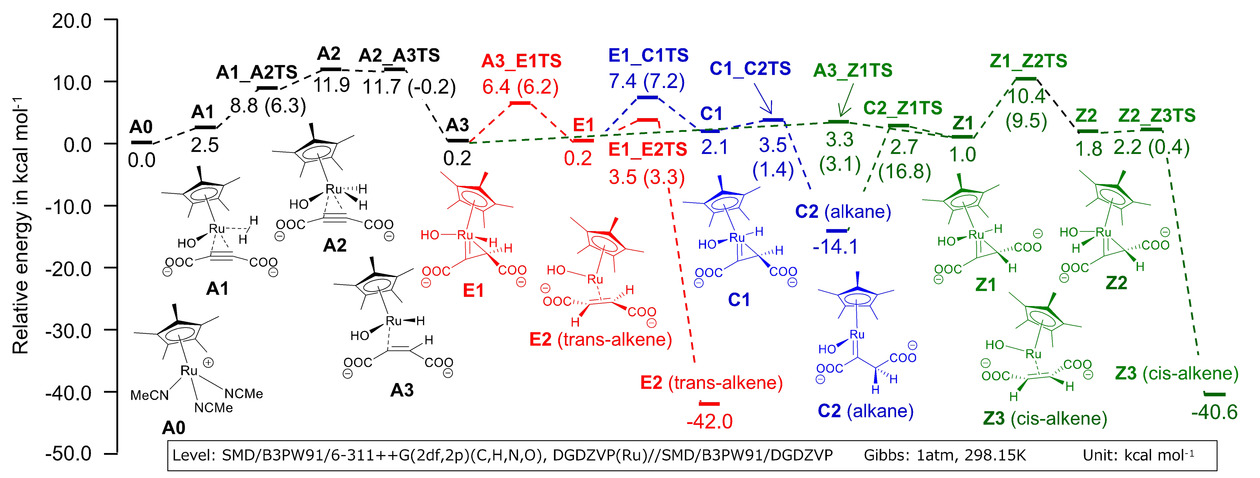
Density-functional-theory (DFT) simulations clarified the trans selectivity of the ruthenium-catalyzed hydrogenation of ADC. Using a simple PHIP setup, sufficient 13C polarization was achieved for hyperpolarized 13C fumarate, enabling ex vivo detection of 13C malate metabolized from fumarate in mouse liver-tissue homogenates, as well as in vivo 13C MR spectroscopy and imaging in a mouse model of acetaminophen-induced hepatitis.
- Stewart, N. J.; Nakano, H.; Sugai, S.; Tomohiro, M.; Kase, Y.; Uchio, Y.; Yamaguchi, T.; Matsuo, Y.; Naganuma, T.; Takeda, N.; Nishimura, I.; Hirata, H.; Hashimoto, T.; Matsumoto, S. Hyperpolarized 13 C Magnetic Resonance Imaging of Fumarate Metabolism by Parahydrogen-induced Polarization: A Proof-of-Concept in Vivo Study. ChemPhysChem 2021, 22 (10), 915–923. DOI: 10.1002/cphc.202001038